
Water Use for Beef
The argument “the water use for beef is exorbitantly high” (short version: “a gazillion litres of water go into a single burger”) is fairly common - but does it actually hold up?
A rant - on a whim, and not finished.
Regular readers here will have noticed that I’m a vehement advocate of pasture farming. In that case the average rainfall onto a pasture would also be counted towards the “gazillion litres of water"(1). Yet it would have rained on that pasture with or without cattle - only, without cattle the pasture would have markedly lower biodiversity or ecological value. So it’s not very honest to count that water, especially since a cow only uses it temporarily before excreting it again on the very same spot.
Grass has to be grazed off now and then to form its roots properly and to renew itself. Various insects need the dung that cattle (and other ruminants) leave behind to lay their eggs, and as food for their offspring.
The numbers that count
But what trumps all of these arguments is an overview by the German Federal Environment Agency on “water resources and their use” (I’m looking at the 2022 version as I write this, and yes, it’s in german language, but you can understand the graph contained within it):
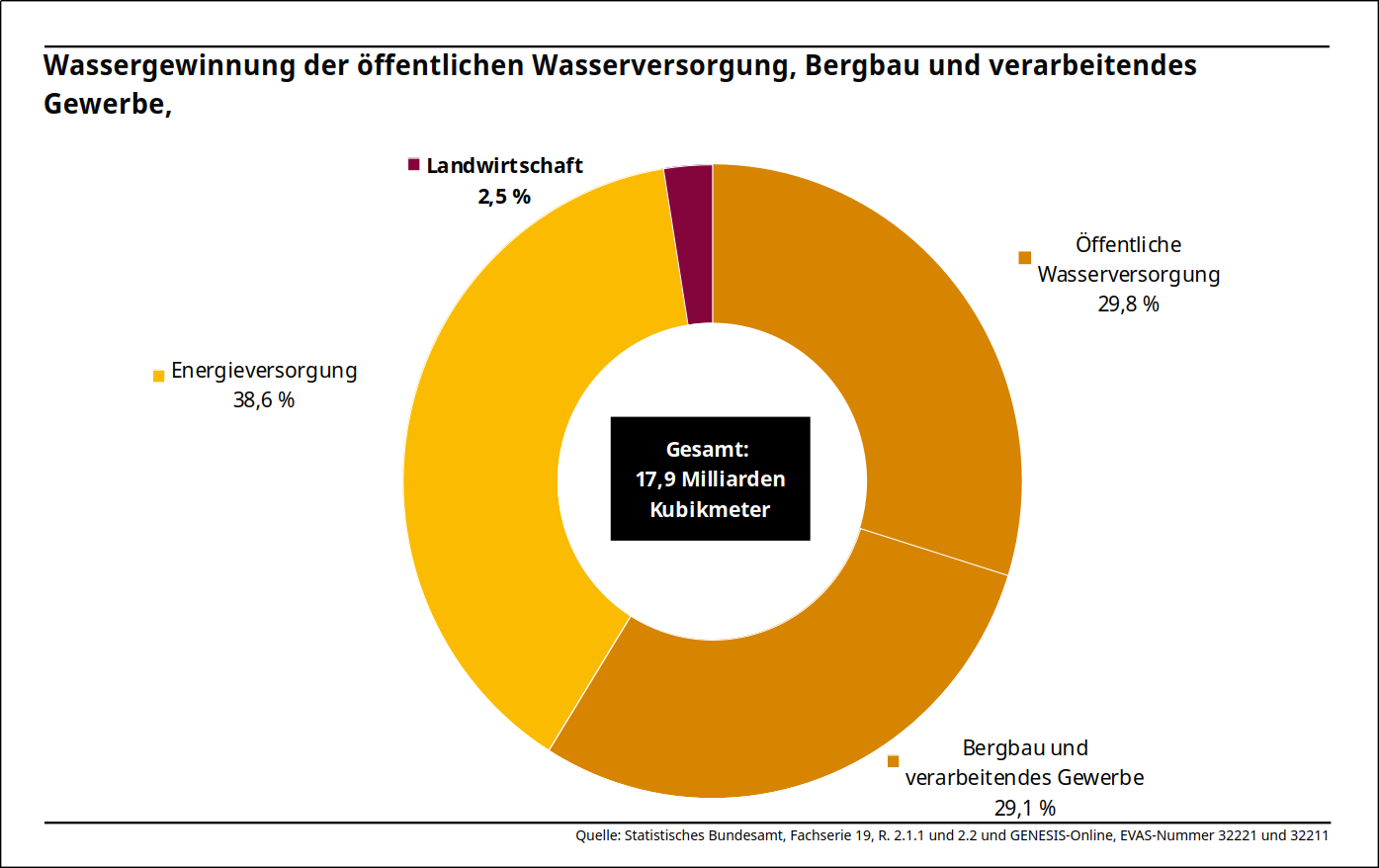
Listed there: the total water withdrawal for the year, made up of surface water, groundwater etc. These figures contain no rainwater. Agriculture (and that’s all of it, plant and animal alike) “consumes"(2) a mere 2.5% of the water withdrawn, while the public water supply - which includes household use - accounts for 29.8% of the water withdrawn.
In volume terms (once you net out exports and imports) Germany is more than self-sufficient (3) in beef(4) - which means the water use for cattle farming is a fraction of agricultural use, and therefore less than 2.5% of the total.
Rain doesn’t count as a water withdrawal, but since the rain would fall anyway - and we don’t tally it into the water use for street cleaning either - I regard the “virtual water” in the burger, those very gazillion litres, as a completely inadmissible basis for comparison.
If agriculture accounts for only 2.5% of the water withdrawn, and animal agriculture only a fraction of that, and bringing up ruminants only a fraction of that, then we have distinctly better places to cut water use than the production of our food - and, on top of that, of the most nutrient-dense foods known.
Bottom line
Twelve times as much water goes into the public water supply as into agriculture. Anyone worried about the water in their burger should first rip out their own bathtub, shower in the rain and worry less about the non-productive grassland around their house: the lawn sprinkler gets questioned far less often.
In other words: the “gazillion litres” yardstick isn’t watertight: it is Good that so much water goes into a burger - anything else would mean drought and desertification.

