
Pasture-Raised Ruminants
Ruminants, especially cattle, are generally considered the most wasteful form of meat production. But here too, the numbers can point in very different directions, depending on which aspects you include.
That said, I’m not going to write a comprehensive treatise here, just a few of the relevant angles. More detail on individual points in later articles.
“Livestock’s Long Shadow”
is the title of a 2006 report by the United Nations Food and Agriculture Organization (FAO).
The report found that global livestock farming was responsible for 18% of global greenhouse gas emissions. In the same report, this figure was directly compared to the global transport sector, which was estimated at around 13–14% at the time. The resulting headline, “cows are worse for the climate than cars”, spread worldwide and is still frequently cited today.
In 2010, however, one of the authors acknowledged that the comparison was methodologically uneven (1): for livestock, all emissions that could be attributed anywhere had been included; for transport, only the direct emissions from fuel combustion.
The actual direct emissions are considerably lower, and even the current estimated lifecycle emissions for livestock are lower than the 2006 figure. And there are further aspects worth considering.
Cattle belch methane
Correct. In the rumen (one of a cow’s stomachs), microorganisms break down plant fibre and, in doing so, produce methane anaerobically. And methane is considered more climatically potent than carbon dioxide.
This simple picture, however, leaves out a great deal. The FAO looks at an entire industry as an average - but there are circumstances under which the situation looks completely different.
The title of this article hints at one such circumstance, and it’s the one I’ll focus on here: pasture farming. Because the conclusion from the numbers - neither the original nor the since-corrected ones - doesn’t have to be “abolish livestock farming”: a change in farming method can actually be superior to abolition:
Effects on the pasture
Grazing by ruminants has a remarkable effect on grassland: the grass is forced to keep growing back. Without grazing, it would eventually “age out” (this is called senescence). Once it reaches maximum height, it produces seeds and then shuts down photosynthesis; the roots retract, the above-ground plant material turns grey and dies without becoming humus. The end state is steppe or desert.
Through grazing, grasses are continuously cropped, forced to develop deeper roots, and constantly return nutrients from photosynthesis to the soil. They feed the soil microbiome; humus is formed (further supported by cattle manure).
It’s even the case that sometimes heavier grazing helps significantly more than tentative grazing (2).
And humus is, globally, a substantially better carbon sink than forests are. (3)
Pesticides and fertiliser
Pasture land requires no chemical pesticides. There are simply no “weeds” that need treating - you don’t have to suppress and eliminate “everything except the one crop.”
Pasture land also manages excellently without nitrogen fertiliser. At a time (I’m writing this in April 2026) when the Strait of Hormuz is closed and large quantities of fossil-derived nitrogen fertiliser cannot reach the market, this is a weighty argument. (See the section after next.)
Biodiversity
The absence of pesticides (“crop protection”) allows far more animals to survive, or to establish themselves in the first place - from mammals through insects to microbes. Particularly interesting: methanotrophic bacteria. These are bacteria that feed on methane, breaking it down considerably faster than atmospheric models would predict.
Aside: Emissions from plant-based agriculture
Strictly speaking this is outside the scope of this article, but relevant context for the next section: plant-based agriculture is also not emissions-free, particularly when nitrogen fertiliser is used. This includes nitrogen oxides - among them nitrous oxide, N2O, considered 273 times more climatically potent than CO2, with a half-life of 79 years, compared to 8 years for methane.
Cycle vs. inflow
Ruminants are part of the ecosystem - they always have been. Given methane’s short half-life (8 years), it is broken down again quickly. With a stable herd size, the constant build-up and breakdown keeps the absolute amount of atmospheric methane from ruminant stomachs stable. And, most importantly, the carbon in that methane is already part of the biological cycle.
This is in sharp contrast to fossil fuels, and even more so to nitrogen fertilisers, which are mostly produced using fossil raw materials: fossil resources were not part of the biosphere until they were extracted; they are additive to it. And the nitrogen oxides they produce are equally non-trivial - for far longer than the methane.

A useful image: imagine a bathtub with massage jets. Ruminant methane corresponds to the water circulated by the jets inside the tub; fossil fuels correspond to the running tap, through which new water is constantly flowing in.
If this bathtub is overflowing: which control would be worth adjusting to stop the overflow?
Erosion protection
Pasture with deep-rooted grasses holds the soil together well. The grass is perennial, and can therefore develop particularly strong root systems. Compare that to annual crops: such soils erode quickly in drought or heavy rain. Annual plants don’t form deep roots that hold the soil together. Other ground cover that might protect the soil is unwanted in crop fields and is generally removed. And after harvest, the soil often remains completely unprotected for a while. All of this applies regardless of the farming method: industrial and organic agriculture alike.
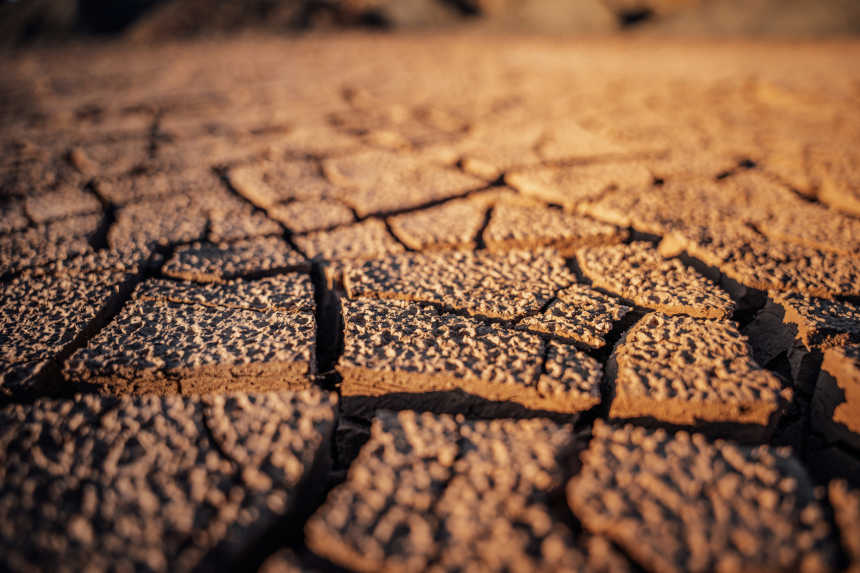
In heavy rain, you occasionally see washed-out arable fields - but very rarely washed-out pastures. And what gets washed away is usually the fertile humus topsoil, which is very slow to rebuild. Best done with animal help.
Regenerative farming methods
Cattle on pasture is just the starting point. The same area can support other animals too. It is perfectly possible, for example, to follow cattle grazing with chickens. The chickens are very interested in the insect larvae developing in the cattle dung - which leads to happy chickens and healthy eggs, without any need to feed grain.
And the way in which grazing is managed also makes a large difference (2).
The unit of measurement
Many figures are presented in units that make animal-based food look particularly bad - “per kg of product,” for example.
One kilogram of beef can actually cover a person’s daily requirement of essential nutrients (essential amino acids, essential fatty acids, and energy). A kilogram of salad, grain, or potatoes cannot. Legumes come closer, but many of their nutrients are far less bioavailable than those in meat. More on that in a later article.
Conclusion
That’s enough for a first look at livestock farming. Much more to come - probably at least one detailed article per section above.
The picture is clear: it comes down to farming method. None of these aspects feature in the mainstream debate - not least because of that original comparison between “all livestock” and “all transport.”
A sensible approach isn’t abolishing one absolute number - particularly when there are approaches that are actually climate-positive.
The authors of the 2006 FAO study acknowledged methodological errors, and in doing so - despite the later correction - permanently obscured the massive advantages that pasture farming offers:
The original - now superseded - study remains a frequently heard argument against animal food.


