The Oil-Level Principle: How I Read the Amino Acid Calculator
The calculator for essential amino acids shows a range from 0 to 150% of the requirement. Some of the sample days fill this range completely, because they deliver considerably more than necessary. Others visibly cover the requirement to different degrees, because their coverage - at least for some of the values shown - is below 150%.
The big question is: how do I interpret that? Should I be happy that it is so easy to cover 100% of the requirement? Is 150% too much? 200%, 400%? And why does the scale only go up to 150%?
How much protein do humans need?
The commonly quoted recommendation is 0.8 g of protein per kilogram of body weight per day (the exact recommendation is 0.83 g/kg, and that is the value the calculator uses as its minimum). Other sources double it or multiply it by two and a half, and there are many reasons given for that.
The figure was last confirmed in 2007 by WHO/FAO/UNU(1), who determined 0.83 g/kg as the “safe level” for 97.5% of people. The German Nutrition Society (DGE) adopts this value, but recommends an increase to 1 g/kg for people aged 65 and over(2). Newer methods and studies(3) than those used by the WHO propose raising it to 1.2 g/kg.
This value also only describes “normal” requirements - athletes need more, and sports nutrition usually works with 1.4 to 2 g/kg(4).
But there is a catch in all these numbers:
The protein content of food is usually overstated. The reason lies in the measurement method: what is measured is the nitrogen content of a food. From that, protein is inferred - on the assumption that the nitrogen was bound in protein. Protein is not measured directly, so some inaccuracy in the protein figure is to be expected(5).
The conversion uses a factor of 6.25 (protein contains 16% nitrogen on average; 100/16 = 6.25). The studies on requirements and the food analyses use the same formula, so the two cancel out: the recommendations are built on the same error, so there is at first nothing to correct.
It has turned out, however(6), that the factor 6.25 can be quite inaccurate depending on the protein source - especially for plant proteins it significantly overestimates the protein content. Mariotti et al. propose a general change of the factor to 5.6(7), but stay with a single average factor for all protein sources.
The German Nutrient Database (BLS) uses a uniform factor of 6.25, as required on food labels. That this does not fit every food equally well is shown by a comparison with the amino acids the BLS also lists: for meat and dairy products they add up to around 90% of the stated protein, for vegetables and cereals more like 75-85%(8).
Another aspect in assessing the requirement is bioavailability. It depends on the type of protein and on antinutrients present in the same food. The amino acid calculator already includes an estimate of bioavailability, and it can be changed.
Too much?
For the essential amino acids this is easy: their requirement is a minimum - exceeding the required amount is not a problem. The body can convert some amino acids into others - just not into the essential ones.
The surplus essential amino acids (in fact: all of them, not just the surplus) also count towards total protein.
Total protein is a different story.
How much is too much? Looking at the recommendations, they span a range by a factor of 2.5: 0.8 at the low end, 2.0 at the high end - and that is the requirement, depending on the individual. Everyone has to estimate that for themselves.
Personally, I don’t worry much about actually eating “too much”: the body has a built-in maximum. Protein is extremely satiating, and it would be genuinely difficult to eat too much of it, at least with normal food. It does seem that maximising it is not an advantage - after all, you don’t want to train your body to routinely burn surplus protein (we have already covered the body’s preferred fuel here: protein isn’t even considered there).
Good to know: in general, looking at total protein is enough for an individual “too much” assessment, rather than at the individual amino acids. Anyone who has been given maximum values by a doctor (for example because of kidney disease) sticks to those, rather than estimating or relying on feeling full.
Too little?
The body can only store protein to a very limited extent. The rule is: whatever is not used straight away (for enzymes, building cells or similar) cannot be stored for later. So intake should at least not fall below the reference value permanently.
Let’s look at the extreme: fasting for several days. The body can buffer that well, by “recycling” protein that is already built in. But as with everything in life: overdo it, and at some point it becomes a problem.
Personally, I prefer to make sure of a comfortably sufficient supply at all times, and give my body variety through occasional fasting phases - whether a full day or intermittent fasting.
Just enough?
On the one hand, you could say: congratulations, the requirement is covered. For me personally that isn’t enough (we’ll get to my rule in the next section), because for one thing the German Nutrient Database provides average values: foods vary, and even the contents stated on packaging come with a certain tolerance. For ready meals in particular, the recipes, and with them the ingredients, naturally vary a lot.
For another, the amino acid calculator shows how quickly a supply that is just about sufficient tips into a shortfall - and who eats exactly as much as they type into the calculator?
It gets even worse when someone is “on a diet” and deliberately limits their portion sizes.
The oil-level principle
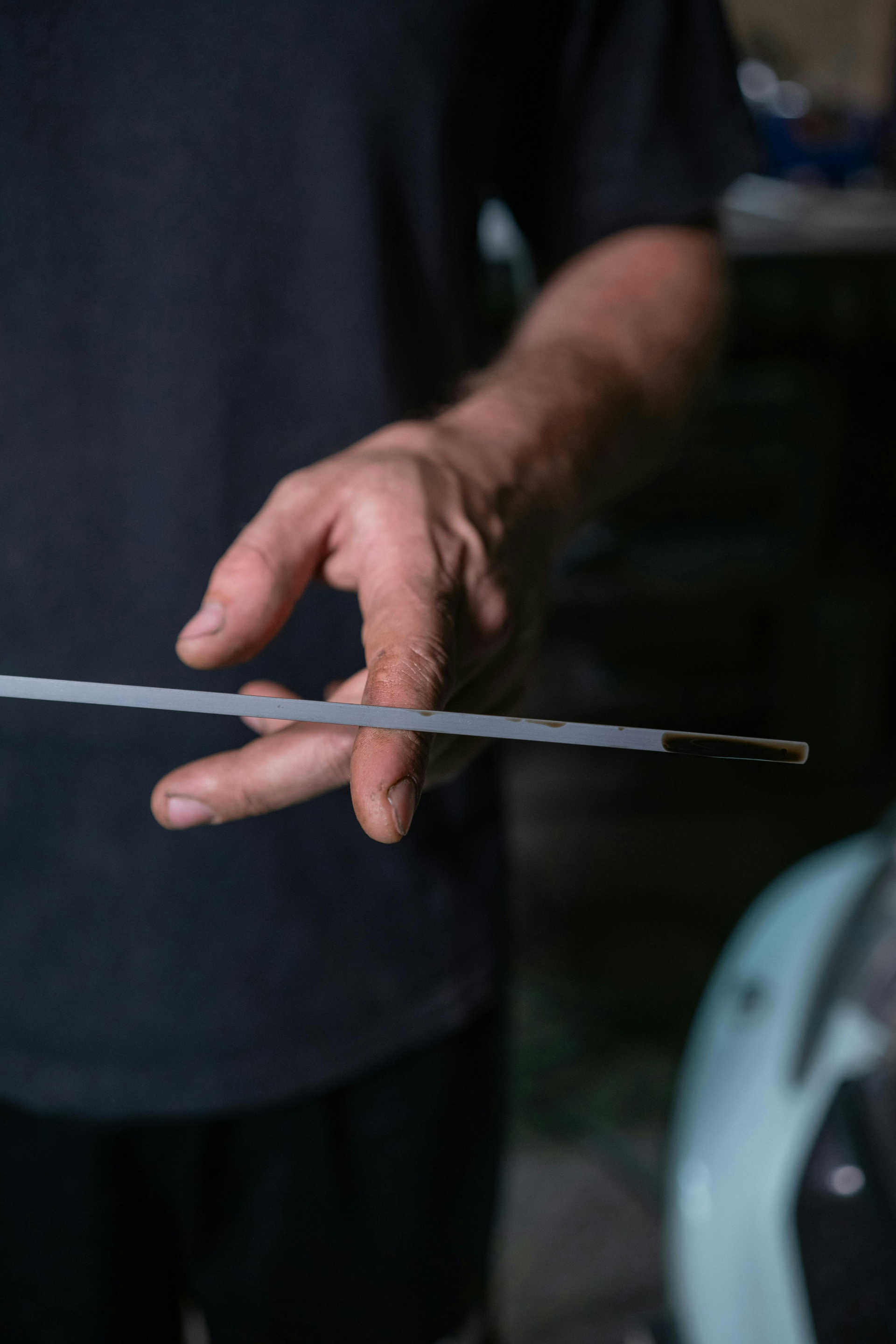
I illustrate my own rule for the supply of essential amino acids and total protein with a car journey on holiday (old-fashioned, with a combustion engine). When I check the oil level before leaving, I’m not happy if it is at the minimum - that is, at “100% of the requirement covered” - but would like a good reserve on top.
This minimum mark on the dipstick is the equivalent of covering 100% of the essential amino acid requirement, and of the total protein requirement too.
That there are good reasons to set the total protein requirement well above 0.8 g/kg strengthens me in this attitude.
The calculator’s minimum total protein requirement is still set at 0.8 g/kg, but it isn’t a limit: the degree of coverage is always shown for whatever menu you choose, so how far to go is more of a personal decision.
My principle for assessing protein supply is therefore: I want a good safety margin above the minimum, and I lean towards the optimum. But since the optimum isn’t really documented and seems hotly debated to me, visualisation is the next best thing. That is why the calculator’s graphical range goes up to 150% of daily coverage: a bar that isn’t completely filled, i.e. below 150% coverage, is the visual cue that the result is closer to the minimum than I’d like. Without taking sides and picking one of the numbers under discussion, my standard is to max out the display - if any indicator is below 150%, I see room for improvement. In the end, though, these are just numbers, and the calculator itself is impartial: it only shows the results - everyone has to interpret them for themselves.
So before I go on holiday, I make sure the car’s oil level is well above the minimum. Fortunately - as discussed above - we don’t even need to consider the maximum level for this illustration, because the body (with normal food and without medically prescribed restrictions) lets us know quite clearly when protein intake is sufficient.
This is where the image fits again: the car is perfectly roadworthy even if we stay well below the maximum, as long as the minimum is always covered.

