Fibre: Necessary or Unnecessary Ballast? A Self-Experiment
Yet another article pointing to contradictions between standard dietary advice and personal experience.
(Fun fact: The german word for “fibre” is “Ballaststoff”. Literally “ballast matter”)
I need to set the context here, because I don’t doubt that Indigestible carbohydrates. Typically distinguished as soluble and insoluble. Conventionally 'indispensable', but neither in the literature nor in my experience truly 'essential'. There are occasions where they can be beneficial. → more can be beneficial, but only in specific circumstances. And I’m not in a position to definitively identify those. I’m only providing a counterexample to the ritual “more fibre == more better” statement.
(Sorry, this is a long one. It tells the story that led me to ignore the standard advice. For more than 1½ years I’m now waiting for the predicted apocalyptic consequences of my experiment.)
Diagnosis first
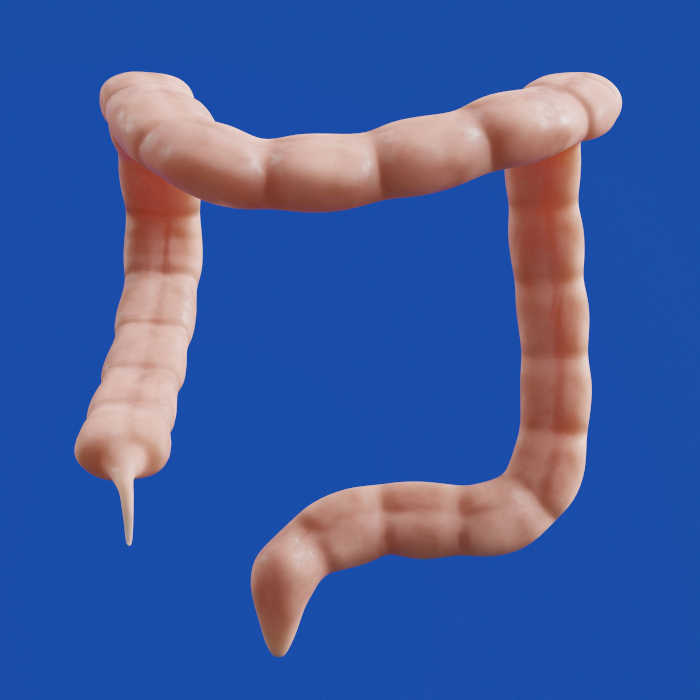
My own experience with and without fibre comes in the context of a bowel condition, presented to me in retrospect as inevitable, chronic, and a lifelong recurring latent risk of inflammation: diverticulosis.
This is a mechanical change in the large intestine: small pouches form, in which residue can accumulate and then become inflamed. These local inflammations can be very painful. So painful, that I ended up in hospital during a business trip in 2011, and so serious that I was not allowed to leave to collect my suitcase from the hotel after the diagnosis.
Treatment of this and other “conditions”
First: I write “condition” in inverted commas, because this is clearly a non-contagious illness. It’s primarily a mechanical matter: these pouches (“diverticula”) are either there or not. If they’re there, that’s “diverticulosis.” If they’re inflamed, it’s “diverticulitis.”
Personally, I have no fondness for hospital food, but that wasn’t a problem in 2011, since I was put on a drip immediately anyway. Alongside the antibiotics, this also fed me intravenously (though only with sugar, it was a glucose/antibiotics infusion), giving the bowel a chance to rest. Afterwards came what my mother used to call a bland, gentle diet: explicitly low in fibre, explicitly designed to give the bowel as little work as possible.
I was subsequently strongly advised to increase my fibre intake back to the generally recommended level. That’s also part of the standard treatment: low fibre during inflammation, high fibre otherwise.
How much fibre is recommended?
It depends. Nutritional science lists Essential nutrients are those that the body cannot synthesise itself and must obtain through food – vitamins, essential amino acids, and fatty acids. - those you must consume because the body needs them but cannot produce them itself. Deficiencies result without them.
Fibre is not on that list. (Strictly speaking, it isn’t even a nutrient.)
Dietary guidance, on the other hand, insists on 30g of fibre per day. I did hit that target for a long time. If you regularly fall short of this amount, many problems that occur tends to be attributed to the shortfall.


As predicted, my symptoms returned from time to time. Sometimes a mild twinge, sometimes a more painful inflammation. Fortunately never again bad enough to require hospitalisation. But I was prepared for this: diverticulosis is a mechanical condition, and you can’t alter the mechanics.
Cause and effect: a first suspicion
It took a long time before I formed a suspicion: the twinges were appearing more and more frequently and intensely, and would then subside for a while. At some point I associated them with almonds: “yoghurt with almond butter” is also extremely tasty. And the pain consistently got worse whenever I’d eaten some.
Since it’s very easy to test such a suspicion, I started tracking my almond consumption carefully from that point on, and correlating it with my symptoms. And indeed: almonds reliably triggered stronger inflammations in my case.
Avoiding almonds did significantly reduce the frequency and severity of the inflammations. Not to zero, though, and only until - for reasons I still don’t understand - a hospital visit was necessary again in 2023. This time, on a Sunday, fortunately only as an outpatient: If you turn up at the hospital with a ready-made diagnosis, you get some strange looks. A blood test showing an inflammatory marker of 129 (normal is under or around 1) does, however, convinces them that something painful is going on.
My solution
After almonds had been reliably triggering stronger inflammations, but milder inflammations were still occurring without almonds too, I started a self-experiment in 2024: permanent avoidance of all fibre.
Standard dietary advice would predict immediate and unavoidable complete constipation, but nothing of the sort happened. Similarly, all the classic guidance worries greatly about the composition of the gut microbiome when fibre is removed. Interestingly, however, I’ve never received any advice - let alone pre- or probiotics - after a course of antibiotics, to rebuild a disrupted microbiome. And antibiotics were sometimes necessary against the inflammations, with guaranteed sweeping effects on the microbiome.
My explanation
Constipation
One explanation I’ve found for the absence of constipation lies in fat: the liver produces bile, and the body absorbs fat only up to a certain amount. The rest is excreted, which prevents constipation (1).
In the context of a ketogenic diet, it apparently also works without fibre. Another consideration always mentioned with fibre - the slower absorption of Briefly: Anti-Nutrients. They either block the absorption of other nutrients, or cause other (typically unwanted) reactions → more and other antinutrients - also seems irrelevant when you simply don’t consume those.
Microbiome
And the microbiome seems to be having fewer problems than I was told to expect. Ultimately also easy to explain: there is no(2) single definitively good or bad microbiome composition. There are more and less common compositions, and under the premise of a ketogenic diet, it seems that different conditions prevail from “the usual.”
The fact that dietary/medical advice worries about my microbiome when I don’t eat fiber, but does not worry about it after a dose of antibiotics, is yet another aspect.
The “bottle brush” effect
From time to time I’ve read about fibre’s effect to clean out stuff that it passes by, in some cases it was described with a “bottle brush” illustration.
To me it seems that mechanical inflammatory pouches do not benefit from even more material passing by. Also not from gases caused by bacterial fermentation blowing up the intestines further.
Yes, I know that this contradicts the current medical standard-of-care. But enough anecdotal evidence also equals data, and I know I’m not the only one with this experience.
Outlook: is this permanent?
One remaining challenge: avoiding fibre entirely is not completely easy to maintain — and on one day when I deliberately ate “outside the rules” (because it “hasn’t killed me so far”), the consequences were immediate: a flare-up of inflammation. Only mild, but enough to notice immediately.
So I need to correct myself: avoiding fibre is easy (when you have such a sufficient motivation to do so).
Since then I’ve aligned myself with Richard Feynman, placing my own experimental experience far above the (apparently so far unsuccessful) standard treatment:
“It doesn’t matter how beautiful your theory is, it doesn’t matter how smart you are. If it doesn’t agree with experiment, it’s wrong.”
― Richard P. Feynman
For me, the answer is clear: until further notice, this is how it stays.
Personal validation: a colonoscopy with no abnormal findings. Only the (mechanical) diverticula were still there, of course — but completely without residue, objections, or further findings.
And when even the gastroenterologist looks directly and finds nothing pointing to a problem, that’s reason to stay the course. He had no explanation for why the standard advice isn’t working for me. He doesn’t understand ketosis. But given the findings, he also didn’t try to talk me out of my conclusion.