
Carbohydrates Are an Important Source of Energy...
…for a very small number of species. Are humans among them?
Dietary guidelines and quite a number of organisations stress that carbohydrates are the preferred fuel for humans, and recommend getting more than 50% of our energy intake in this form. Elsewhere, we’ve already found an alternative way of looking at that:
The question keeps coming up...
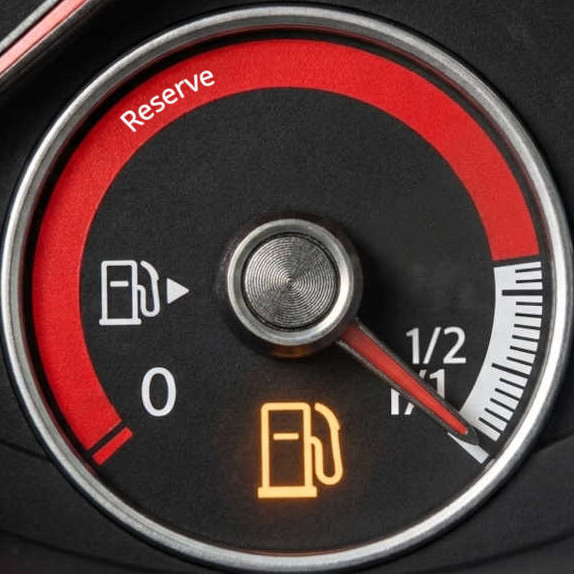
The Preferred Fuel
If we go looking for animals whose bodies actually run on pure carbohydrates (glucose, fructose, sucrose, starch) - absorbed directly through the small intestine, that is, without the detour of microbial fermentation into fat - we end up in a biologically fascinating niche.
Things aren’t always what they seem
In the animal kingdom, carbohydrates in their pure form are scarce and hard to secure in evolutionary terms. Almost all large herbivores (cattle, horses, gorillas(1)) have a fat and protein metabolism that is well disguised from the outside: They eat carbohydrates (cellulose), but their microbes turn these into short-chain saturated fatty acids before they are taken up by the body.
A closer look at different digestive systems

"Eat the Rainbow", Part 2
Yes: saturated fats. The very same ones current dietary guidelines warn us about. In humans, too, fibre is fermented into saturated fats, and we’ve looked at that before as well.
Schrödinger's fat: good and bad at the same time

Fibre and Saturated Fat
The classic mantra “fibre == good, saturated fat == bad” contradicts itself (and what butter specifically has to do with it)
Read more →Genuine sugar metabolism
There are, however, animals that skip the fermentation bioreactor entirely and have a genuine “high-carb” metabolism. They all share one feature: their food is so extremely rich in sugar that they don’t need microbes at all to process the molecules. And they’re not particularly common.
Nectar feeders (nectarivores)
The purest carbohydrate eaters on the planet. Nectar consists almost entirely of water, sucrose, glucose and fructose. Nectarivores have extremely short, highly efficient small intestines that shoot the sugar straight into the blood. One example: hummingbirds(2). To beat their wings up to 80 times per second, their hearts run at 400 to 1,200 beats per minute, with a (resting) breathing rate of 250 breaths per minute. While hovering, they cover 95% of their energy directly from the sugar in the nectar. The cells of their small intestine absorb glucose at record speed. At night, or when the sugar runs out, they drop into a state of stupor (torpor), so that their scarce fat reserves last until morning. They are the ultimate “sugar-burning machines"(3).
Structurally, of course, they also need protein; they cover that by eating insects and spiders.
Like hummingbirds, nectar-feeding bats(4) fly in energy-intensive hovering flight. They burn the sugar they’ve drunk directly in their flight muscles within minutes, without first converting it into glycogen or fat at all.
Another group are the sunbirds(5) - very similar to hummingbirds, just on other continents.
Fruit eaters (frugivores)
This is where it gets interesting for humans, as we often wrongly place ourselves in this category. True frugivores live mainly on ripe fruit (sugar and starch). Thanks to global food transport and cold chains, these foods are now available regardless of season, but in evolutionary terms fruit is only available for a very short period of the year (I’m writing this from a central European perspective - in the tropics, fruit is available for considerably longer).
Unlike insect-eating bats, fruit bats(6) eat almost nothing but ripe fruit and drink nectar. Their gut is extremely simple: it is short, has no colon or caecum worth mentioning, and hardly ferments at all. Food is completely digested in about 30 minutes: in a single night they can take in two and a half times their body weight in food. To do this, they suck the juice out of the fruit, swallow the sugar and simply spit out the indigestible fibres. After meals, their blood sugar rises to levels that would put a human into a diabetic coma, but their cells take up the glucose rapidly.
Insects - aphids, bees and the like - I’ll leave out of this for now; mammals and birds will do for a start.
And humans?
We’ve already established that humans can tolerate a fair amount of carbohydrate - at least for a while, until insulin resistance may set in. The real, minimal carbohydrate requirement of the human body, however, is extremely small, and on top of that the body can produce and cover this requirement entirely by itself, so there is no dependency on dietary carbohydrates:
The real carbohydrate requirement of humans

How Many Carbohydrates Does the Body Actually Need?
The body needs glucose, but not carbohydrates. A look at the biochemistry shows how it effortlessly sources everything it needs on its own.
Read more →Carbohydrates are an important source of energy for humans: as set out in the linked article, the internal requirement is around 57 grams per day. That corresponds to 228 kcal, which, however, doesn’t have to come from food.
The dietary guidelines advise us to take in more than 50% of our energy requirement this way. With the customary 2,000 kcal a day, that would make 1,000 kcal (250 g) - about 440% of the internal requirement of 57 g, and ∞% (or rather: division by 0 %) of the external requirement.
What 250 g of carbohydrates and more do to the body can - as always - be explored right next door in the simulator.
From this point of view, I’ll stick with the preferred fuel described at the beginning, and continue to run on fat, in ketosis, thank you very much.


